
Chess Strategies for Beginners: 10 Simple Ideas That Work
Most beginners lose games for the same few reasons: they leave pieces undefended, bring the queen out too early, and forget to protect their king. The good news is that you can fix all of that with a handful of simple strategies. You don’t need to memorize openings or calculate ten moves ahead to win more games.
This guide gives you ten chess strategies for beginners, each with a short rule and the reason it works. If you are new to the game, make sure you know the basic chess rules and how each piece moves first.
What is chess strategy?
Strategy is your long-term plan: where to place your pieces, which squares to control, and how to keep your king safe. It is different from tactics, which are short tricks like forks and pins that win material right now. Good strategy gives you the position where tactics appear, and you need both to win.
The 10 strategies at a glance
| # | Strategy | Why it helps |
|---|---|---|
| 1 | Control the center | Your pieces reach more squares |
| 2 | Develop your knights and bishops | Every piece joins the game early |
| 3 | Castle early | Your king is safe and a rook is activated |
| 4 | Don’t move the same piece twice in the opening | You waste no time |
| 5 | Keep your queen at home early | She can’t be chased around |
| 6 | Connect your rooks | They protect each other |
| 7 | Check for hanging pieces every move | You stop most blunders |
| 8 | Trade when you are ahead | The extra material counts more |
| 9 | Make a simple plan | Your moves have a purpose |
| 10 | Use your king in the endgame | It becomes a strong piece |
1. Control the center
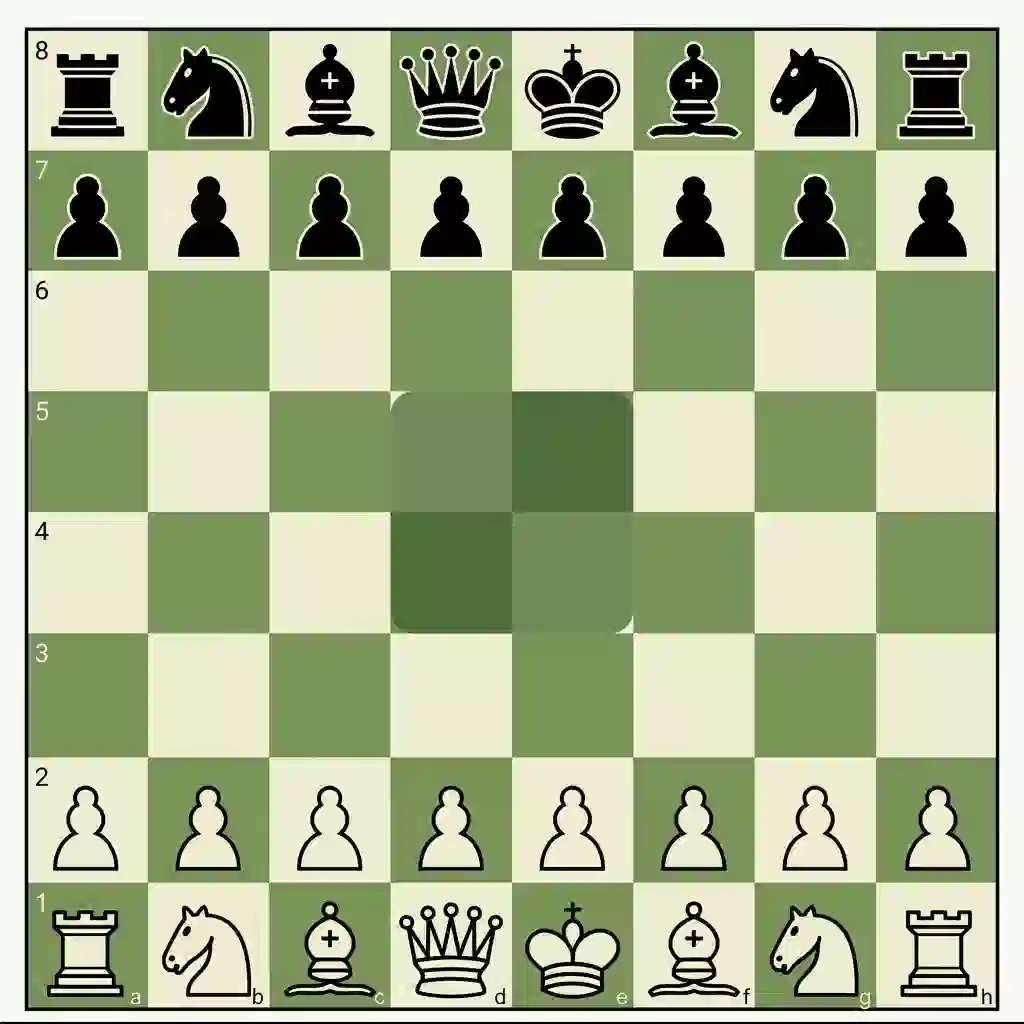
The four central squares, e4, d4, e5 and d5, are the most important on the board. A piece in the center can reach more squares than the same piece on the edge, so it has more power. Start by moving a central pawn, usually the e-pawn or the d-pawn, two squares forward, and then support it with your pieces.
2. Develop your knights and bishops
“Development” means moving your pieces off the back row and into the game. Knights and bishops are the best pieces to bring out first. Knights usually go toward the center (for example, to f3 and c3), and bishops go onto open diagonals. Try to develop all four before you start any attack.
3. Castle early
Your king is safest tucked into a corner behind its pawns, and castling gets it there in a single move while also bringing a rook toward the middle. Most players castle within the first ten moves. A king left in the center is a target. If you need a reminder of the rules, see the section on castling in our rules guide.
4. Don’t move the same piece twice in the opening
In the first ten or so moves, every move should bring a new piece into the game. If you move the same knight three times, you are using up time while your opponent develops. The exception is when you have a clear reason, such as capturing a piece or answering a threat.
5. Keep your queen at home early
The queen is your strongest piece, so bringing her out on move two feels natural. It is usually a mistake, because your opponent can attack her with a knight or bishop and gain a free move each time she has to run. Develop your minor pieces first, and bring her out when it is safe.
6. Connect your rooks
Rooks are connected when there are no pieces between them on the back row, so each one protects the other. To get there, develop your knights and bishops, move your queen off the row if she is still there, and castle. Connected rooks can then move to the center files together.
7. Check for hanging pieces on every move
A hanging piece is a piece that your opponent can capture for free, because nothing protects it. This is the most common way beginners lose material. Before every move, ask three questions:
- What did my opponent’s last move threaten?
- Is any of my pieces unprotected or attacked?
- Does my planned move leave a piece hanging?
This takes ten seconds and prevents most blunders. If you want to know what each piece is worth, see chess piece values.
8. Trade pieces when you are ahead
If you win a piece or pawn, trades help you. When you have more material, every trade makes your advantage bigger in proportion, and the extra pieces matter more on an emptier board. If you are behind, do the opposite: avoid trades and keep the position complicated. Use the point values to keep count, and never trade a rook for a knight unless you have a reason.
9. Make a simple plan
Once your pieces are developed, don’t make random moves. Pick one simple goal and work toward it. Good beginner plans include:
- Move your worst-placed piece to a better square.
- Put a rook on an open file, a column with no pawns.
- Attack a weak pawn that is hard to defend.
- Attack the king, if it hasn’t castled.
Ask yourself each turn, “What is my plan?” If you don’t have one, improve your worst piece.
10. Use your king in the endgame
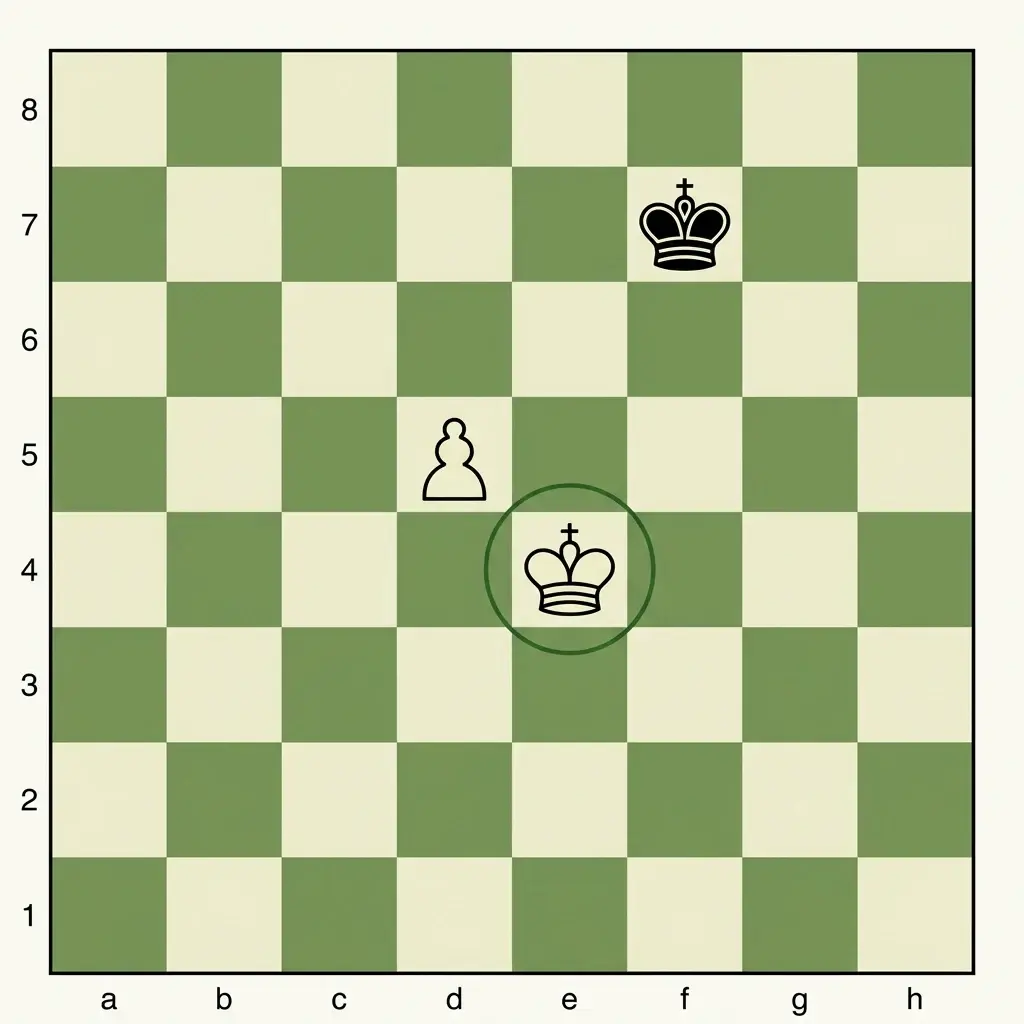
In the opening and middlegame, the king hides. In the endgame, when queens and most pieces are gone, the king becomes a strong fighting piece. Walk it toward the center, support your pawns with it, and use it to stop your opponent’s pawns. Many beginners keep the king in the corner too long and lose winning endgames.
A sample opening that follows the rules
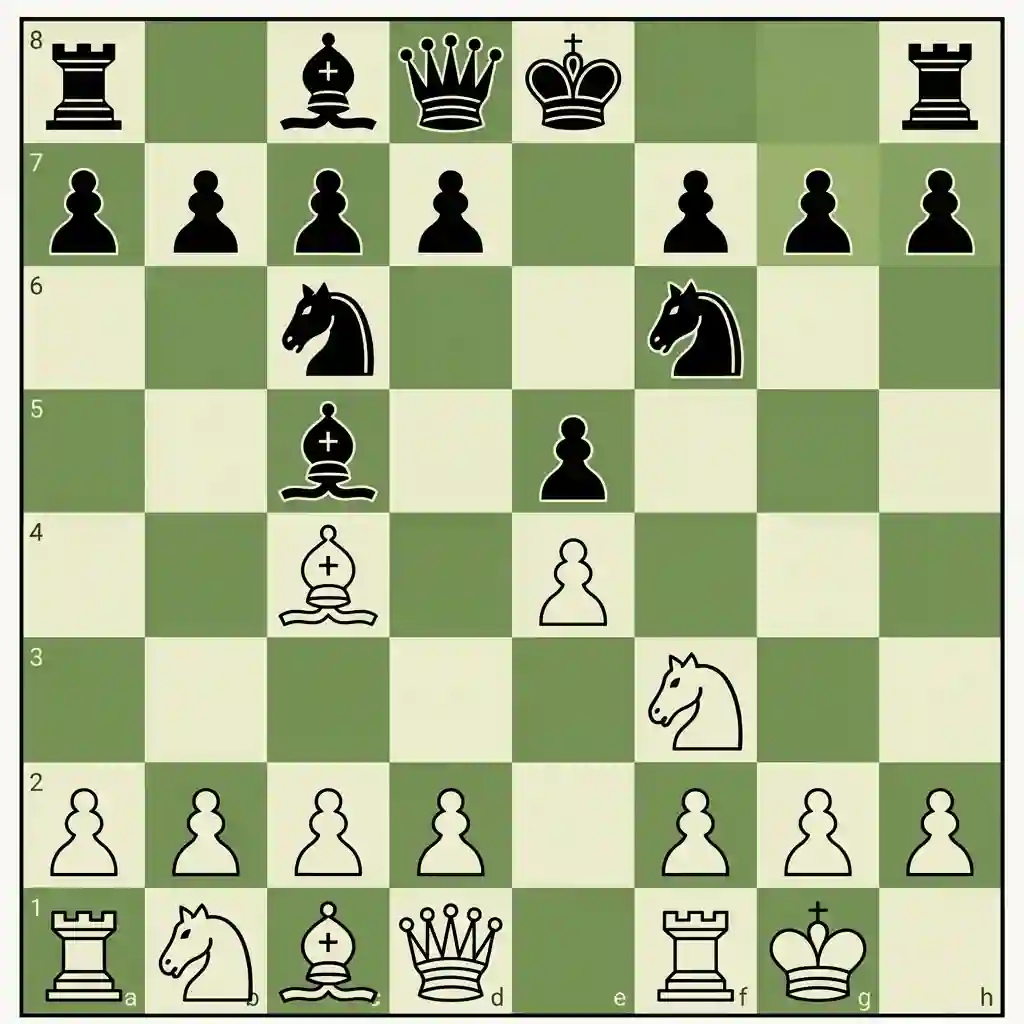
Here is a short example that uses most of the ideas above. We spell out each move in words so that you can follow it on your board:
- White moves the e-pawn to e4, and Black answers with the e-pawn to e5. Both sides take the center.
- White develops a knight to f3, and Black develops a knight to c6.
- White develops a bishop to c4, and Black develops a bishop to c5.
- White castles, and Black develops a knight to f6.
In four moves, White has taken the center, developed three pieces and castled, and Black has developed three pieces too. Nobody has moved a piece twice, and both queens are still at home.
Common beginner mistakes
- Attacking too early. Develop your pieces first, then attack.
- Grabbing every pawn. Taking a pawn can cost you time and leave pieces hanging.
- Ignoring your opponent’s threats. Always check what their last move does.
- Not castling. A king in the center can be attacked quickly.
- Moving pawns in front of your king for no reason. They protect your king, so be careful.
- Playing too fast. Most blunders happen when you move in a few seconds.
How to practice these strategies
- Play a few games a week against the computer or other beginners and try to use these ten ideas.
- After each game, look for the moment you lost material, and find which strategy would have helped.
- Work through these free practice lessons on the basic endgames and checkmates.
- Practice finishing games with a lone king, and learn how to avoid stalemate when you are winning.
Frequently asked questions
What is the best strategy for a beginner in chess? Control the center, develop your pieces, castle early, and check for hanging pieces before every move. Those four habits will win you many games.
How do I win chess games faster? Don’t rush the attack. Develop your pieces, keep your king safe, and wait for your opponent to make a mistake, then take the free material.
Should beginners attack or defend? Both, but in order. Start by defending and developing, then attack once your pieces are active and your king is safe.
Is chess more about strategy or tactics? Both matter. Strategy sets up the position, and tactics win material within it. Beginners often gain the most by cutting down on blunders.
How long does it take to get good at chess? With regular play and review, most people see clear improvement within a few weeks. Real strength takes months and years of practice.
What to learn next
Once these strategies feel natural, learn what each chess piece is worth so you can judge trades, and practice basic checkmate patterns so you know how to finish a won game.