
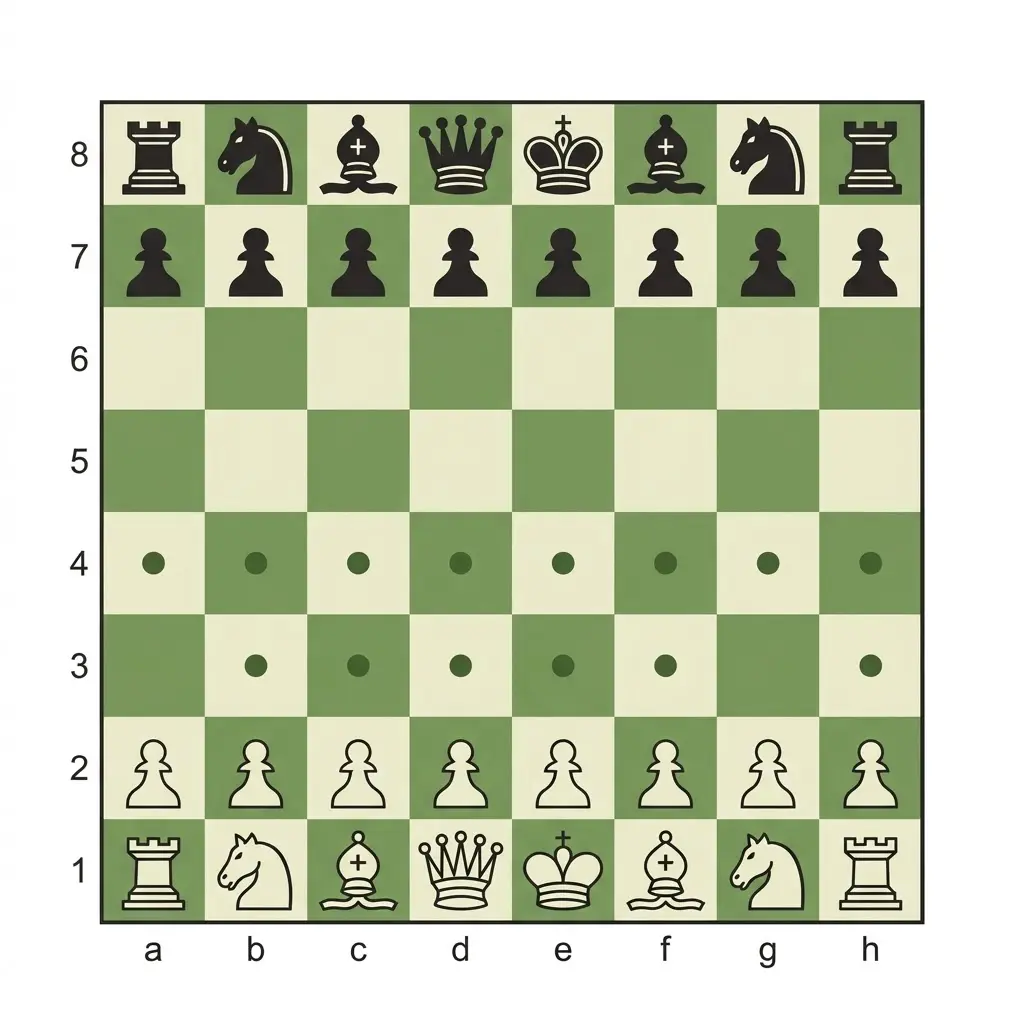
How Each Chess Piece Moves (With Diagrams)
Chess has six kinds of pieces, and each one moves in its own way. Learn those six movements and you know enough to play a full game. This guide covers each piece with a simple rule, a diagram and the mistake beginners make most often.
If you haven’t set up your board yet, start with how to set up a chess board correctly.
Quick summary of how chess pieces move
| Piece | How it moves | Can it jump? |
|---|---|---|
| Rook | Any distance, straight (forward, back, left, right) | No |
| Bishop | Any distance, diagonally | No |
| Queen | Any distance, straight or diagonally | No |
| King | One square in any direction | No |
| Knight | In an L shape: two squares one way, then one square sideways | Yes |
| Pawn | Forward one square (two on its first move), captures diagonally | No |
First, how capturing works
In chess you capture by moving a piece onto a square held by an enemy piece. The enemy piece is removed from the board and yours takes its place. You can never capture your own pieces, and every piece except the knight must stay in its path and cannot jump over other pieces. Pawns are the one piece that captures differently from how they move, as you’ll see below.
how do the rooks move in chess
The rook moves in straight lines: forward, backward, left or right. It can go as many squares as it likes, as long as nothing is in the way. If an enemy piece blocks the path, the rook can capture it but cannot go past it.
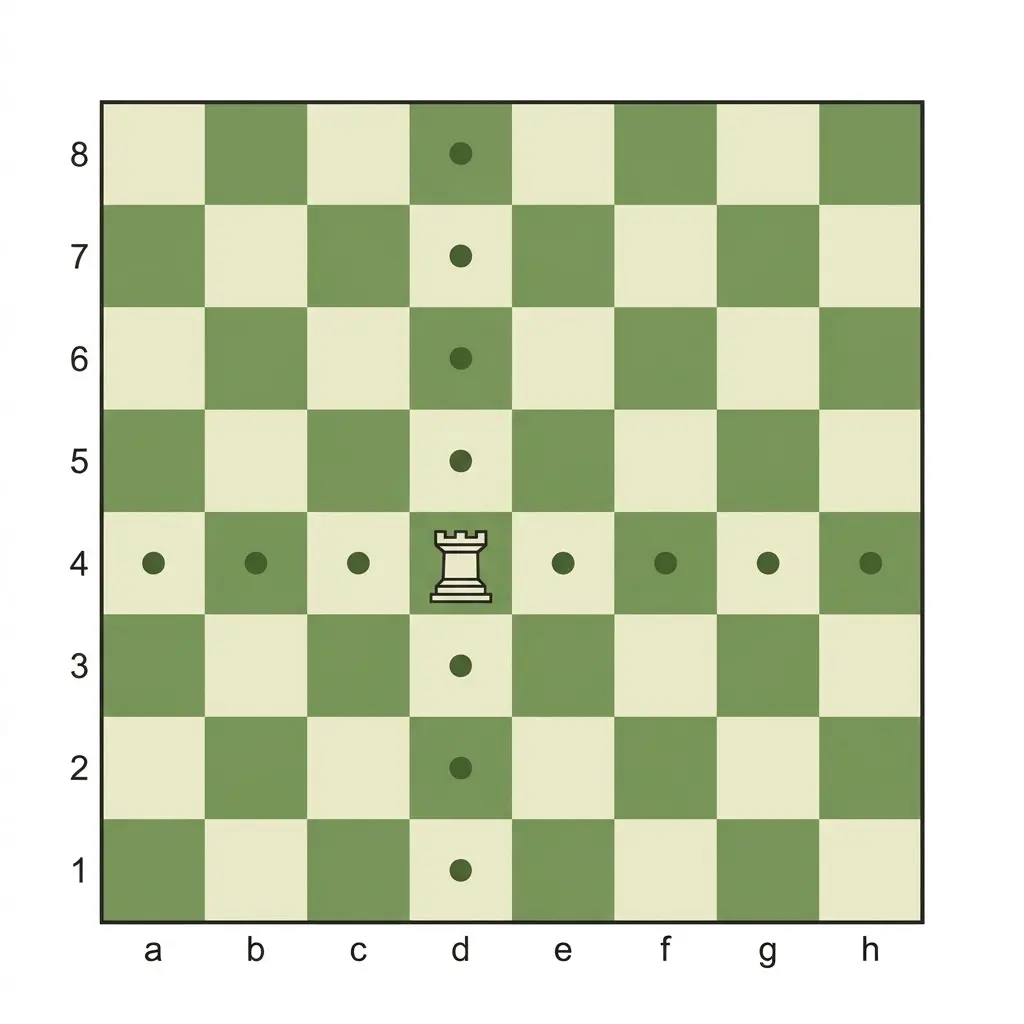
Beginner tip: rooks are strongest on open files, which are columns with no pawns on them. Move your pawns out of the way and the rooks come to life.
how does the bishop move in chess
The bishop moves diagonally, any number of squares, again as long as the path is clear. Each player starts with two bishops, and each one stays on the same color of square for the whole game. One bishop is always on light squares and the other always on dark squares.
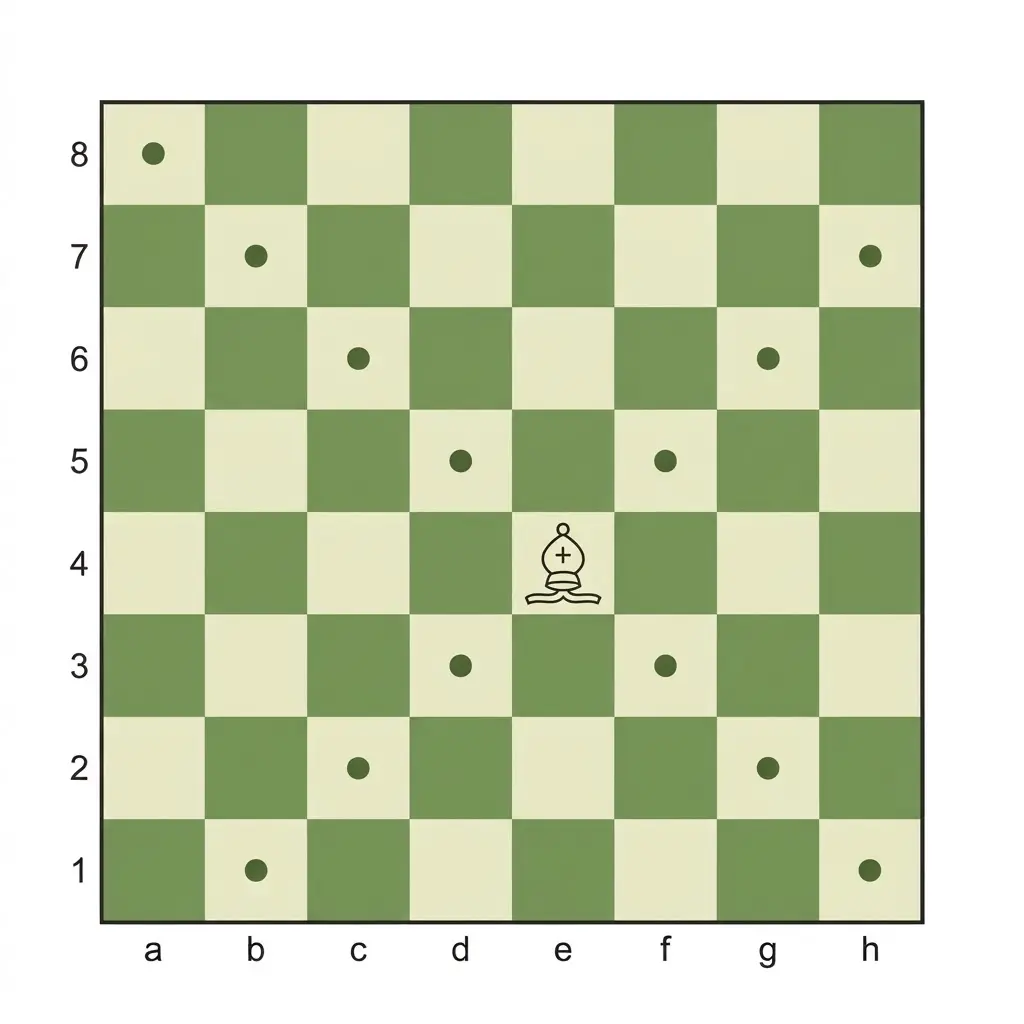
Beginner tip: if you lose one bishop, you can no longer control squares of that color with a bishop. That is why two bishops working together are so useful.
How the queen moves
The queen is the most powerful piece. She combines the rook and the bishop, so she can move any number of squares in a straight line or on a diagonal. If you know how the rook and bishop move, you already know how the queen moves.
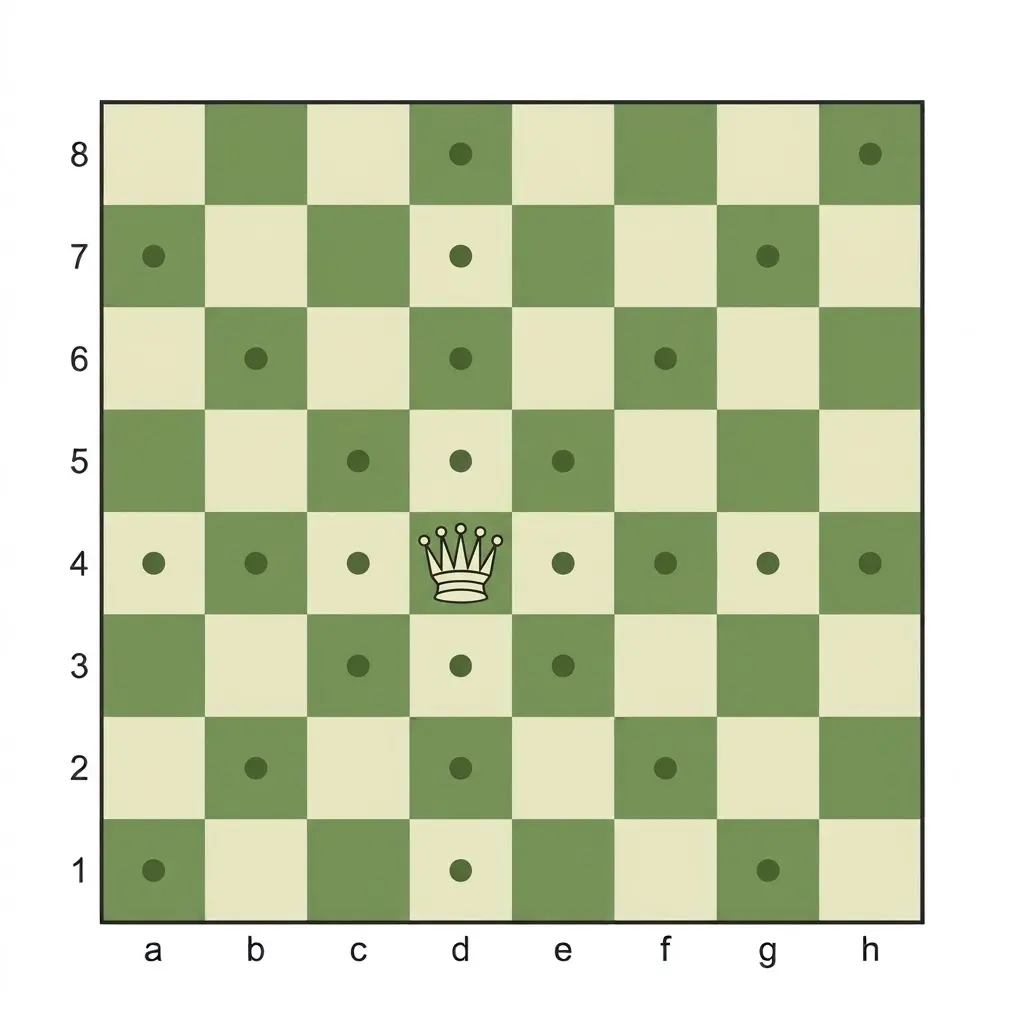
Beginner tip: because the queen is so strong, don’t bring her out too early. Enemy pieces can attack her, and you will lose time moving her away.
how does the king move in chess
The king moves one square in any direction: forward, backward, sideways or diagonally. It is the most important piece, because if your king is trapped and cannot escape an attack, you lose the game. That is called checkmate.
The king has one extra rule: it can never move onto a square that an enemy piece attacks. The king also has a special move with the rook called castling, which is covered in our castling guide.
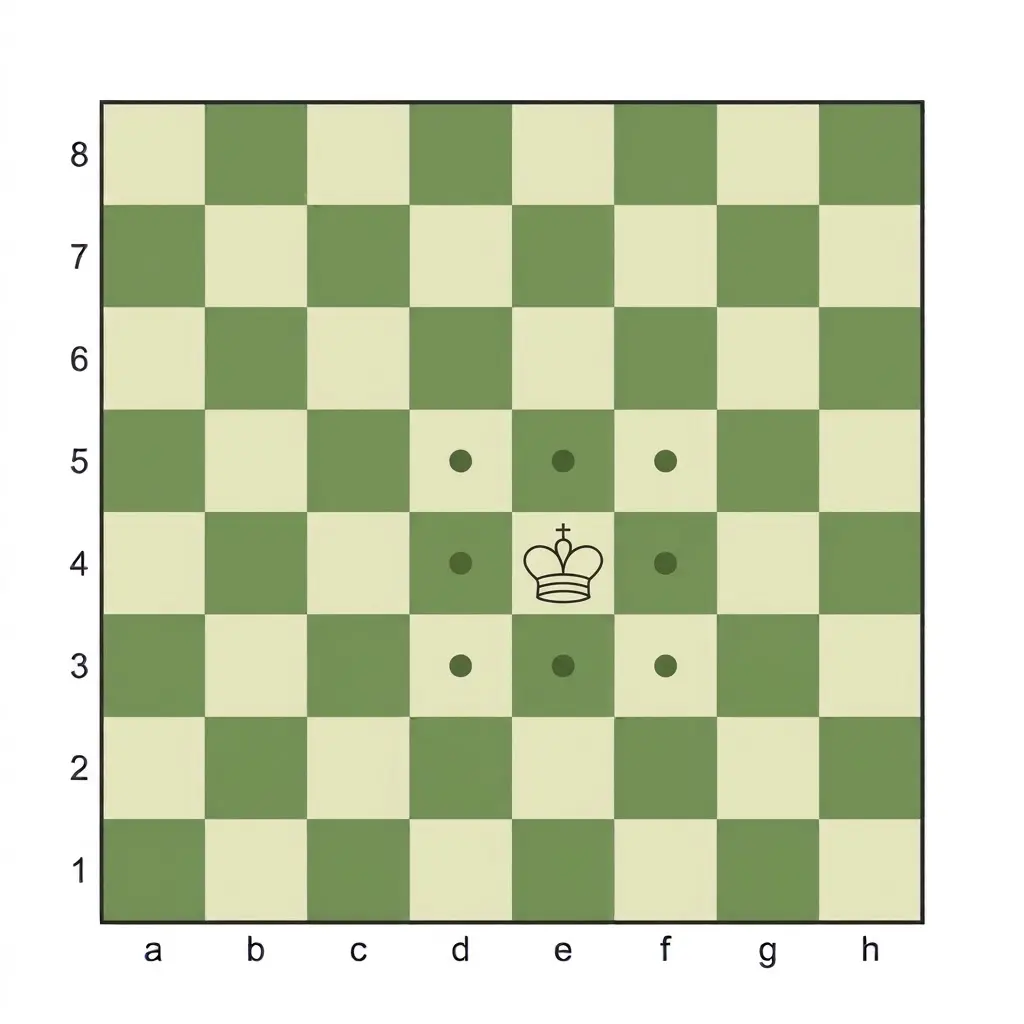
Beginner tip: keep your king safe early, usually by castling. A king stuck in the middle of the board is easy to attack.
How the knight moves
The knight moves in an L shape: two squares in one direction (up, down, left or right), then one square at a right angle. It is the only piece that can jump over other pieces, so a knight can leap over a crowd of pawns and pieces to land on an empty square or on an enemy piece.
A knight always lands on a square of the opposite color from the one it started on. From the middle of the board, a knight can reach up to eight different squares.
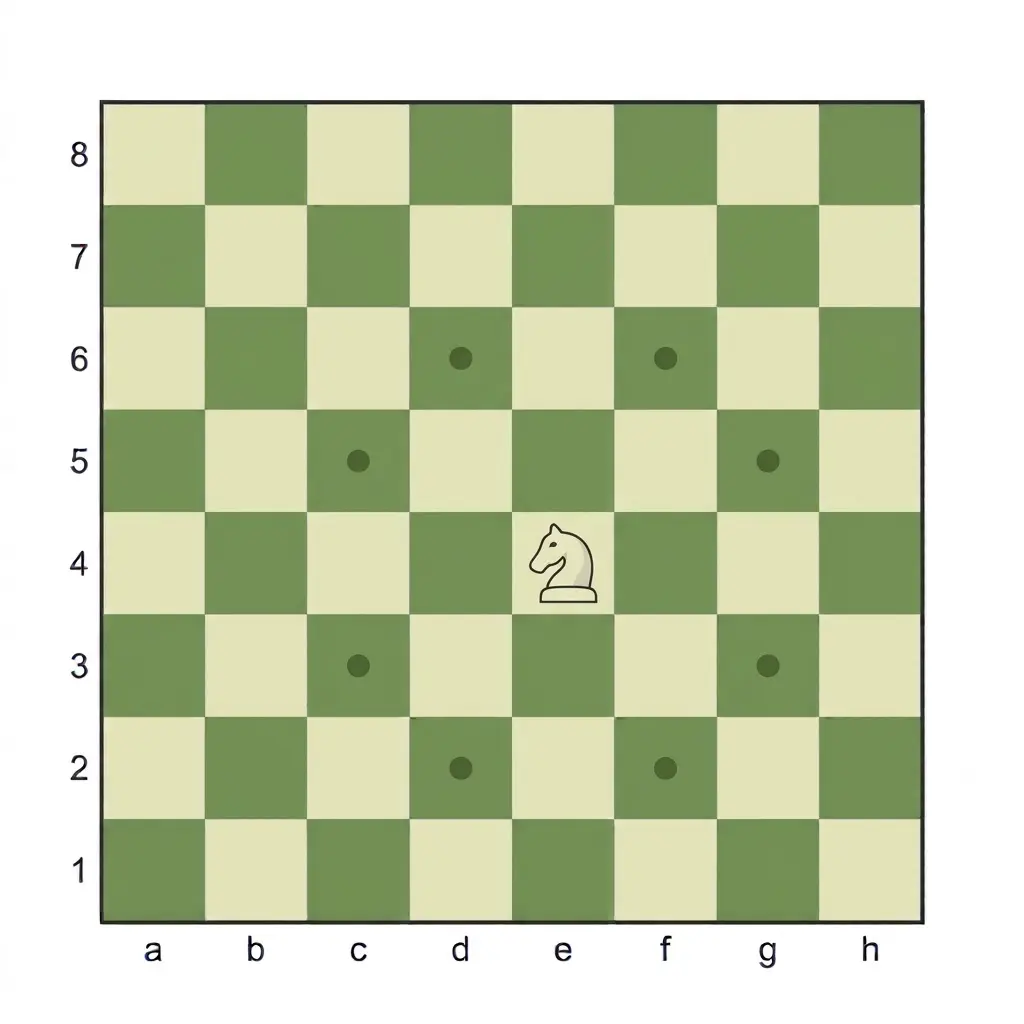
Beginner tip: knights are strongest near the center and weak on the edge of the board, where they control fewer squares. A knight on the rim is dim, as the old saying goes.
How the pawn moves
The pawn is the most unusual piece, because it moves one way and captures another.
- Moving: a pawn moves straight forward one square. On its very first move, it may go forward two squares instead. It can never move backward.
- Capturing: a pawn captures one square diagonally forward, never straight ahead. A pawn blocked by a piece directly in front of it cannot move at all.
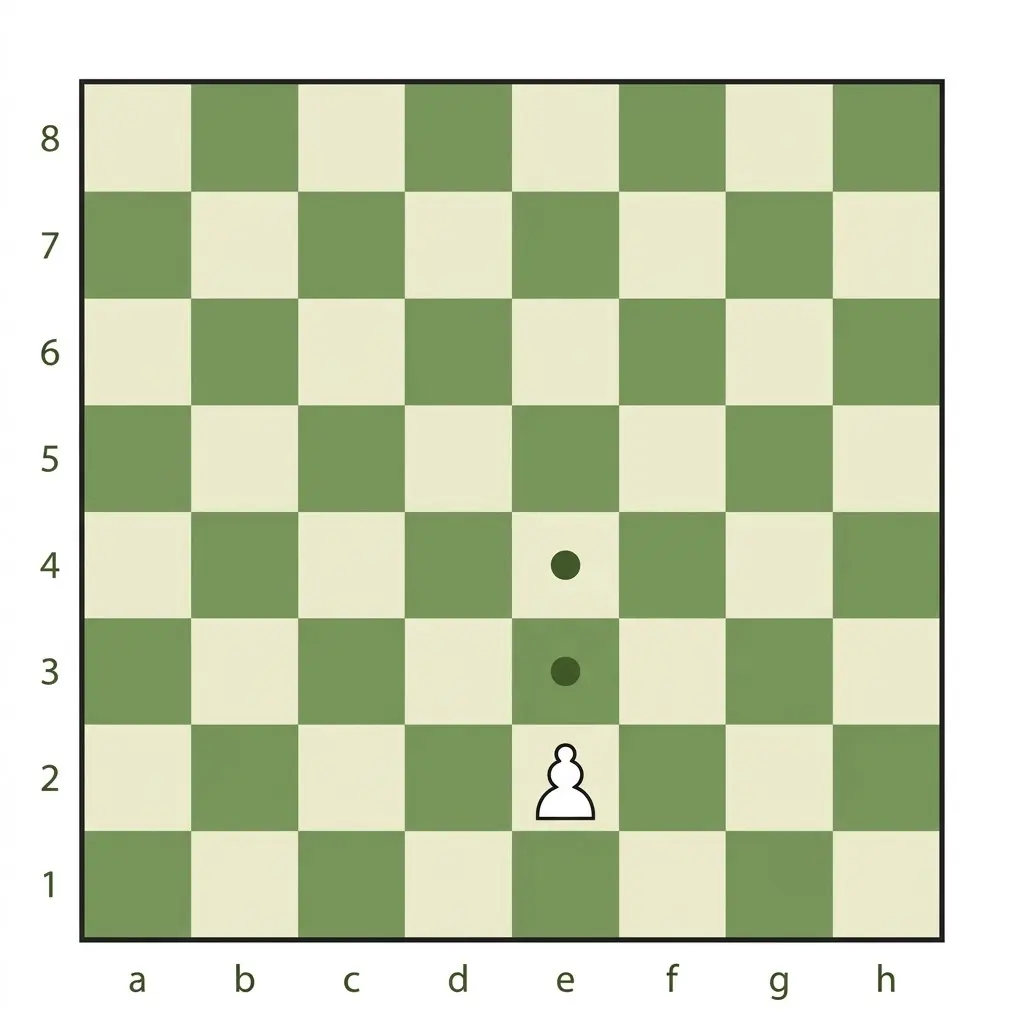
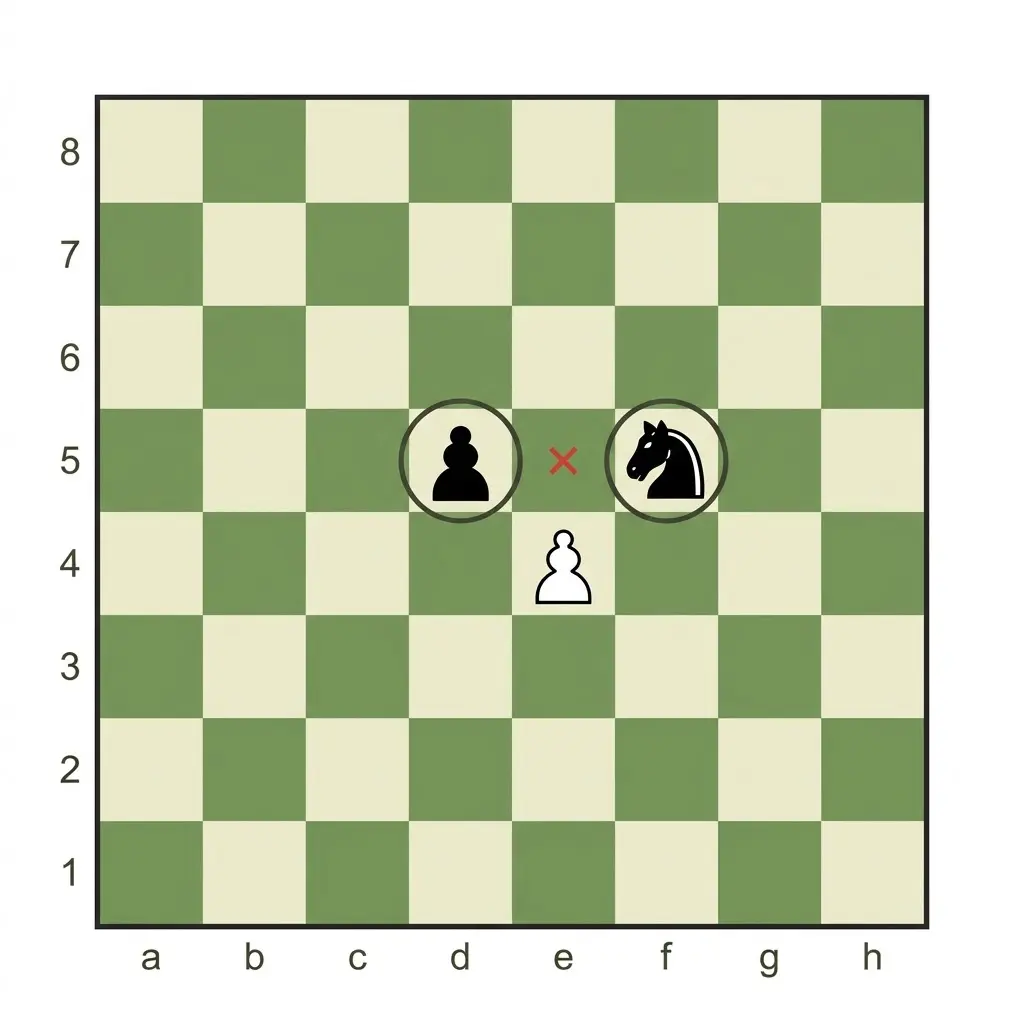
Pawns also have two special rules. If a pawn reaches the far end of the board, it is promoted to another piece, usually a queen (see pawn promotion in chess). And there is a rare capture called en passant, explained in our en passant guide.
Beginner tip: pawns cannot go back, so think before you push them. Every pawn move changes your structure for good.
Common mistakes beginners make
- Capturing straight ahead with a pawn. Pawns capture diagonally only.
- Forgetting the bishop stays on one color. A bishop on a light square can never reach a dark square.
- Trying to jump with a piece other than the knight. Rooks, bishops and queens need a clear path.
- Moving the king next to an enemy piece. The king cannot move into danger.
- Bringing the queen out on move two. She is strong, but she is also easy to chase.
Frequently asked questions
Which chess piece moves in an L shape? The knight. It moves two squares in one direction and then one square sideways.
Can a pawn move backward? No. Pawns can only move forward, and they capture diagonally forward.
Which chess piece is the most powerful? The queen, because she moves like a rook and a bishop combined. The king is the most important piece, but it moves only one square at a time.
Can chess pieces jump over other pieces? Only the knight can. All other pieces must move along a clear path.
Practice what you’ve learned
The fastest way to remember how the pieces move is to play. Try a free game against the computer on a site like Lichess, and watch the legal moves highlighted for each piece. After a few games, the movements become automatic.
When you’re ready, read basic chess rules every beginner should know and learn what each chess piece is worth.